
История героя
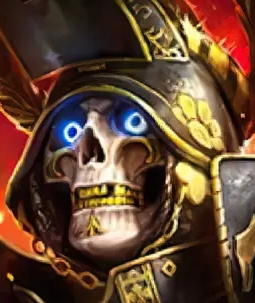
Великий Восставший
Орды нежити · Защита
Как и в мире смертных, среди Орд нежити есть разделение на сословия. Здесь есть множество ничем не выдающихся солдат и несколько могущественных повелителей, которые намечают курс для народа. В отличие от капризных и честолюбивых смертных, нежить обладает исключительным единством и послушанием. Их иерархия абсолютна. История тысяч сражений подтверждает эту аксиому. Нежить, мечтающая улучшить свое положение в обществе, – это полный абсурд.
Тем не менее у некоторых возникают такие идеи. Возможно, смертные проецируют собственные привычки, нормы и характер на причудливые и чуждые умы бессмертных существ. Это обычная психологическая потребность – выделить определенного представителя безликих и безымянных Орд нежити. Таким представителем стал Восставший рыцарь – персонаж из первобытных легенд, своего рода собирательный образ нежити. Восставший рыцарь – заурядный обыватель, переутомленный и недооцененный слуга жестоких лордов нежити. Попранный и забитый, Восставший рыцарь однозначно хочет повышения по службе, как и любое другое существо в этом мире. Больше влияния, больше власти, больше славы, больше золота. Несомненно, привлекательность таких вещей превосходит даже проклятие нежити.
История гласит, что Восставший рыцарь после очередного дня тяжелой работы и поражений, от которых ломило его древние кости, забрался в свой гроб, чтобы отдохнуть. Он сокрушался о низком положении, ежедневных заботах, неоцененных трудах и проявленном к нему неуважении. Он хотел стать знаменитым героем и молился, чтобы это произошло. Вдруг перед этим проклятым созданием в его убогих покоях предстала сама Арбитр и возвестила, что его желание будет исполнено. Но вместо того, чтобы возвеличить Восставшего рыцаря, она создала нового – Великого Восставшего. Были ли желания Восставшего рыцаря намеренно искажены? Была ли это шутка? Ученые и богословы предупреждают, что Арбитр, какой бы могущественной она ни была, не обладает божественной силой абсолютного творения. Но простые люди часто видят в Арбитре богиню, даже если это и кощунство. Никто не может сказать, что произошло на самом деле.
Вскоре в округе появился новый Восставший. Он преобразился: весь развязный, в сверкающей позолотой броне, с могучим и безупречным клинком. Его доспехи, украшенные изображениями крысы-компаньона Жорика, защищали от сильнейших ударов. Великий Восставший мастерски владел мечом и был непревзойденным во всех поединках. Никто не знал, заменил ли этот новый сияющий рыцарь старого и значит ли это, что Орды нежити теперь станут еще могущественнее. Некоторые говорили, что видели обоих на одном и том же поле боя. Один съежился в задних рядах, а другой был окрылен славой во главе наступления. Кто-то утверждал, что Восставший рыцарь и Великий Восставший были заклятыми соперниками. Другие говорили, что это отец и сын. А были и те, кто считал, что Восставший рыцарь – воплощение зависти отца, которого превзошел отпрыск. Некоторые говорят, что Великий Восставший примирился со своим двойником, и они стали товарищами по оружию. Ведь кто-то из них все-таки Великий, а кто-то не очень. История не знает правды.
Несомненно, всё это народное творчество мало похоже на реальные факты, тем не менее оно позволяет заглянуть в сознание людей. Восставший рыцарь представляет собой идею того, что добродушная душа остается таковой даже став нежитью. Великий Восставший – идею славы, которая не затмевает разум достойного. Обе эти навязчивые идеи смертных могли вызвать появление Восставшего рыцаря и Великого Восставшего. Популярный миф, возникший из распространенных заблуждений, порождает феномен, который лежит в основе самого мифа.
Только богам известна правда.
Текст: Plarium, RAID: Shadow Legends — официальная локализация.
Текст в оригинале (EN)
Just as there are exalted heroes and lowly peons among the mortals, so too is it the case that the Undead Hordes are composed of many small and humble soldiers, and a few rare and powerful overlords who steer the course of the collective. Unlike the fractious, ambitious mortals, the Undead appear to have singular unity and obedience. Their hierarchies are absolute. The history of thousands of battles lend their weight to this being axiomatic. An Undead who dreams of rising above its station is, on principle, absurd.
Yet the idea persists. Perhaps mortals naturally project their own habits, norms, and personalities onto the bizarre and alien minds of those beings who live in death. Against the vast, nameless, faceless Hordes, it may be a psychological need to put a face and a name to Undeath. This explains the ubiquity of the Deathknight, a figure of primal legend that has been a sort of stock character in portrayals of the wars against the Undead. The everyman of the Undead Hordes, the Deathknight is the overworked and under-respected servant of the many dreaded lords of the Undead. Given his symbolic role as the downtrodden skeleton, many wondered if the Deathknight, like themselves, wanted a promotion. More clout, more power, more glory, more gold. Surely the allure of such things transcends even the curse of Undeath.
The story goes that the Deathknight, after another day of drudgery and defeat from which he resolutely regenerated his ancient bones, climbed into his coffin to rest. He lamented his lowly stature, his common chores, his nameless toils, his lack of respect. He wished to be made a famous hero, and prayed that it would come to pass. Then, astoundingly, the Arbiter herself appeared before this accursed creature in his meager chambers, and announced that it would be so. But rather than elevate the Deathknight to greatness she simply created a new Deathknight – an Ultimate Deathknight. Was it a rebuke upon the lowly Deathknight for her to twist his intent thusly? A jest? Scholars and theologians caution that the Arbiter, powerful though she be, has not the deific power of absolute creation. But common folk often see the Arbiter as a goddess regardless, even if it is a minor blasphemy. None can say what truly transpired.
There soon came to be new sightings of the Deathknight, but a Deathknight transformed, all swagger and glittering gilt plate, bearing a mighty and pristine blade. His armor, engraved with depictions of the rat companion Nibbles that traditionally accompanies the Deathknight, was proof against mighty blows. This Ultimate Deathknight was himself a swordmaster, unrivaled in all his duels. The people did not know whether to fear a new resurgence of Undeath with a more powerful Deathknight at its helm, or if the old Deathknight had been replaced or surpassed. Some said they saw both on the same battlefield, one cringing in the back ranks and the other covered in glory in the thick of the melee. Some claimed the Deathknight and the Ultimate Deathknight were bitter rivals. Others said they were father and son. Some said both, and the Deathknight represents the jealousy of a father surpassed and replaced by his own legacy. Some say the Ultimate Deathknight reconciled with his counterpart, and that although there can be only one Ultimate Deathknight and one not-so-Ultimate Deathknight, they became comrades in arms. The histories are muddled beyond comprehension.
Surely, all of this wildly creative storytelling bears little resemblance to the facts on the ground, but it is nonetheless a fascinating insight into the minds of the people. If the Deathknight represents the idea that a humble and well-meaning soul could still find some measure of dignity in Undeath – a comforting fantasy – then the Ultimate Deathknight represents the fantasy that fame will not go to one’s head and power will not corrupt that humble soul into an arrogant brute. Both of these mortal obsessions, writ large upon the blank canvas of Undeath’s clean white skull, may yet have caused the manifestation of both types of Deathknight. A popular myth, arising from no particular source but from many common misapprehensions, could be reflected and amplified by its own infamy, until it gives rise to the very phenomenon that produced the myth to begin with.
Only the gods can say.