
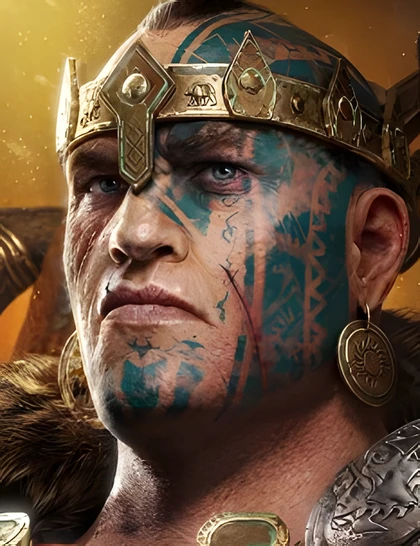
История героя
Грегор Владыка дюн
Варвары · Защита
Во время Второй великой войны Арбитр нуждалась в генерале, который руководил бы кочевниками пустыни Крохан – бесчисленными враждующими народами. На протяжении поколений кланы кочевников отвергали любую идею централизованной власти. Арбитр считала, что существует только один человек, способный убедить свой народ отбросить многовековое соперничество и вражду: Грегор из клана Песчаного медведя.
Воин отличался мощью, гулким голосом, добродушием и лукавым нравом. Но особенно Арбитр отметила его политическое чутье и умение достичь консенсуса. Грегор поощрял своих детей вступать в брак с представителями других кланов, налаживая таким образом отношения с разными народами. Он даже сражался с врагами союзников, а взамен не ждал ничего, кроме дружбы. Поначалу многие кланы не доверяли Грегору, но сомнения исчезли, поскольку члены его союза процветали из-за меньшего количества междоусобиц.
Взяв из собственного арсенала боевой топор, Арбитр явилась перед вождем. Это оружие было изготовлено дворфами. Такого качества жители наземного мира не видели уже много веков. Если бы Грегор смог объединить народ и руководить им как единой боевой силой, Арбитр отдала бы ему топор, символ власти и престижа. Грегор согласился, поскольку взгляды Арбитра совпадали с его собственными.
Вождь незамедлительно продемонстрировал стойкость и непоколебимость даже в сложных ситуациях. Когда демоны вторглись в пустыню, Грегор неистово перебегал от одной битвы к другой, помогая всем кочевым народам дать отпор захватчикам. Одержав победу, он предложил уцелевшим воинам следовать за ним, чтобы прославиться еще больше. Топор, который вождь держал высоко, сверкал в лучах солнца пустыни. В те тяжелые времена мало кто мог устоять перед таким предложением. Во время битвы на Кровавом холме Грегор защитил целый лагерь раненых солдат, которые прятались в песчаной долине. Он противостоял волнам демонов на вершине дюны. Свидетели говорили, что он сражался так яростно, как оберегающая потомство медведица. Если бы Грегор не совершил этот подвиг, захватчики хлынули бы в долину и убили всех раненых. Подчиненные назвали его Владыкой дюн. Вождь стремительно вознесся на вершину славы.
Неизвестно, удалось бы Грегору укрепить власть и сохранить свой военный статус, поскольку еще до окончания Второй великой войны против него организовали заговор. Давние соперники называли вождя демагогом и тираном, угрожающим свободе, которой так дорожили кочевые народы. Иностранные правители опасались появления мощной орды кочевников и отправляли агентов, чтобы оклеветать Грегора и саботировать его деятельность.
Один за другим, явно или скрытно, союзники и сторонники предали Грегора. Одни поддались влиянию товарищей или давлению извне, а другие и не собирались его поддерживать после того, как непосредственная опасность исчезнет. В конце Второй великой войны он уже не был Владыкой дюн. Его власть развеялась, словно песок на ветру. Казалось, мечта Грегора привить кочевникам устойчивое политическое сознание не сбылась. Кроме того, почти все воины его клана были убиты или переселены в результате конфликта. Многие уцелевшие прижились в других кланах или покинули Крохан, отправившись на поиски счастья в другом месте. Грегора терзали сомнения и сожаления. Он задавался вопросом, смог бы он лучше позаботиться о своем роде, если бы не принял предложение Арбитра. Проклиная ее, Грегор со всей силы бросил топор дворфов на землю. Когда он поднял голову, то увидел перед собой Арбитра.
Грегор заявил, что ему больше не для чего жить. Он упрекал и осуждал ее, называя интриганкой и обманщицей, лишенной чувства сострадания к смертным. Но Арбитр простила и утешила его. Она сообщила, что независимость кочевников была одновременно благословением и проклятием. Какой бы мощью и харизмой ни обладал человек, ему одному не под силу заставить людей измениться. Это должны были сделать коллективно сами кочевники. Ни один союз, построенный только на огне и крови, на совместно пережитом ужасе и травме, не может быть прочным.
Грегор понимал смысл ее слов, но всё еще был в отчаянии, воином без цели. В руках Арбитра появился осколок. Она рассказала о его назначении и предложила Грегору вечно бороться с тьмой. Он согласился остаться в осколке, чтобы однажды увидеть, как его народ объединится, а их королевство раскинется вдоль раскаленных дюн Крохана.
Текст: Plarium, RAID: Shadow Legends — официальная локализация.
Текст в оригинале (EN)
During the Second Great War, the Arbiter needed a general to command the Krokhan Desert Nomads, a people of countless warring factions. For generations, the Nomad clans had bristled at any notion of centralized authority. There was only one man the Arbiter thought could persuade his people to set aside centuries of rivalries and feuds: Greggor, 'Great Claw' of the Sand Bear Clan.
A man of ursine strength, booming voice, avuncular warmth, and wicked humor, what distinguished him to the Arbiter was his sense for politics and consensus-building. Unusually for a Nomad chieftain, Greggor had offered many of his precious children as marriage partners and liaisons to other clans, to establish bonds of blood and loyalty. He even directed his clan’s fighting strength against the enemies of his allies, expecting nothing in return besides friendship. Many clans mistrusted him at first – but doubters fell silent as those in Greggor’s coalition thrived thanks to the reduction in internecine strife.
The Arbiter came to Greggor bearing a Dwarven-made battleax from her personal armory, crafted to a standard of excellence not seen among the surface-dwelling world for centuries. She offered him the weapon as a covenant – if Greggor united his people and commanded them as a cohesive fighting force, she would give him the weapon as a symbol of authority and prestige. Greggor accepted, for the Arbiter’s vision matched his own.
Greggor swiftly proved staunch and unbreakable even against overwhelming odds. When Demonspawn invasions began across the desert, he rode at a furious pace from battle to battle, helping Nomads of every stripe fend off the invaders. When he turned the tide and won the day, he bid the surviving warriors follow him for further glory, his gleaming ax in the desert sun as he held it high. Few could resist such an offer in those dire times. At the Battle of Bloody Ridge, he protected an entire encampment of wounded soldiers sheltering in a sandy valley. He held the crest of a dune against wave after wave of Demonspawn, holding the precious high ground and soaking the sands in putrid ichor, witnesses saying he fought with all the fury of a mother sand bear protecting her cubs. Without his heroics, the invaders would have poured into the valley with unstoppable downhill momentum and slaughtered the infirm. After that, his subordinates dubbed him the Dune Lord, and his rise to fame soared.
The world will never know if Greggor could have consolidated his power and made his wartime status permanent, for even before the close of the Second Great War, powers large and small conspired against him. His old rivals called Greggor a demagogue and a tyrant, a menace to the freedoms that the Nomads cherished. Foreign rulers feared the possibility of a powerful, expansionist Nomad horde, and sent their agents to slander and sabotage Greggor’s activities.
One by one, dramatically or quietly, Greggor’s allies and supporters betrayed him. Some were swayed by their peers or by outside pressures, others had never intended to continue backing Greggor once the immediate danger had passed. By the end of the Second Great War he was Dune Lord no longer, his power blown away like sand in the wind, and it seemed that his dream of instilling a lasting political consciousness in his fellow Nomads had failed. Furthermore, nearly every warrior of his clan had been killed or displaced by the conflict. Many survivors had assimilated into other clans, or left the Krokhan to seek their fortunes elsewhere. He was tormented with doubt and regret, wondering if he could have protected his kin better if he had never taken up the Arbiter’s offer. He cursed her, and slammed his Dwarven-made ax to the ground. When he lifted up his eyes from where it lay, he saw the Arbiter.
Greggor told the Arbiter that he had nothing left to live for. Even though Greggor blamed her and excoriated her, naming her a schemer and manipulator incapable of true empathy toward mortals, the Arbiter forgave him and comforted him. She told him that the Nomads’ independent streak was both a blessing and a curse. One person, no matter how mighty and charismatic, could not force change to come – it would have to come from the Nomads themselves, the masses making the choice collectively. No union forged only in fire and blood, in shared terror and trauma, could truly last.
Greggor saw the wisdom in her words, but still he despaired, a warrior without a cause. The Arbiter produced a Shard and explained its function, and offered Greggor the chance to fight against Darkness forevermore. He accepted, wishing to dwell agelessly within the Shard so that one day he might live to see his people unite, their realm stretching across the searing dunes of the Krokhan.