
История героя
Алаз Солнценосный
Варвары · Защита
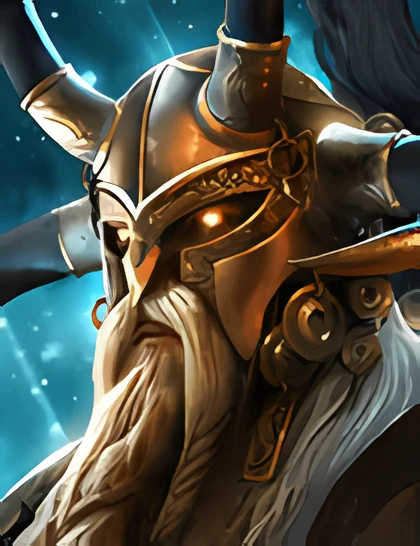
Алаз Солнценосный является героем «Великого солнечного кризиса» – мифа, встречающегося в нескольких телерианских культурах, включая народы Фростхейма, Призрачного порта, Пустошей и пустыни Крохан. Хотя детали сильно различаются, два элемента связывают истории: разрушение солнца Телерии и спаситель, возникающий в результате слияния йотуна и человека. Схожести в этих легендах возникают из-за плохо сохраненной тайны пребывания Алаза на просторах Телерии.
В Фростхейме утверждают, что солнечные лучи стали бледными и тусклыми, а весь мир начал замерзать. Жители Пустошей говорят, что солнце, словно пасущееся на пастбище животное, сбежало и его нужно было вернуть. Версия племен пустыни Крохан утверждает, что солнце устремилось к Телерии и выжгло землю, образовав пустыню. В легендах старых норров солнце, представленное одновременно как могущественный военачальник и воинственное государство, решило совершить набег и разграбить Телерию.
Эти солнечные кризисы – мифологизация вполне реальной проблемы, которая, возможно, никогда не будет разрешена. Бич Тьмы, ужасное заклинание Сайрота, породило оборотней и нежить. Тьма, которую использовал Сайрот для магии, появилась после замерзания источника жизни. Поколения телерийцев стремились понять последствия страшного заклятия. Они ошибочно интерпретировали его как кризис солнца.
С мифической катастрофой боролись два героя, которые в конечном итоге слились в единое целое. Старые норры называли воина Алрик-Фуртас. Их потомки в Призрачном порту помнят его как Альк-таса, а в Пустошах он Аул К'ас. Во Фростхейме зажигают свечи в честь святого Альтаса. Кочевники пустыни Крохан знают его как Аль-Азаса, который каждый день несет по небу пылающий солнечный шар.
Истинная личность этого героя – Алаз Солнценосный. Отсюда и происходят разные имена. Светоносец Алим верил, что он может принести на землю частичку священного солнечного света и остановить бич Тьмы. Он боялся, что вмешательство божественного создания может повлиять на ход истории. Но его сердце слишком сильно болело за Телерию, поэтому решил идти до конца.
Бессмертные светоносцы могут быть среди смертных только в теле одного из них, как и демоны Сайрота. Но кто был бы достоин носить в себе сущность светоносца и солнечную энергию? Алим выбрал благородного и благочестивого йотуна огня, по имени Азах. Его до сих пор почитают самые старые и мудрые йотуны, такие как Альтан. Услышав призыв Арбитра, Азах отправился к порталу в Залы вечности. Там его и разыскал Алим. Эти двое слились в одно существо по имени Алаз. Чтобы вместить огромную силу, которую Алим хотел принести в Телерию, они не могли существовать в одной форме. Когда бремя внутреннего солнца было слишком велико, Алаз выглядел как светоносец. В другое время он принимал менее заметную форму. Когда Алаз становился солнценосным, то даже его топор ломался, не выдерживая такой мощи.
Норры, кроханские кочевники, жители Пустошей и Фростхейма представляли своих героических предков в роли светоносца. Герой вступал в эпическую борьбу с самим солнцем. Баллады Призрачного порта описывают одну затяжную сцену битвы. Во Фростхейме историю рассказывают иначе. Чтобы восстановить солнечное тепло, герой пересекает Телерию, чтобы найти солнечные артефакты. По пути его ждет множество приключений. Версия кочевников описывает фантастическое путешествие по «черной пустыне», как они называют ночное небо.
Настоящая битва Алаза Солнценосного была менее грандиозной, но более серьезной. Он хотел, чтобы его внутреннее солнце заменило замерзший источник жизни. И даже если бы у него не получилось полностью противодействовать бичу Тьмы, то удалось хотя бы замедлить появление нежити и оборотней. Его усилия год за годом, век за веком не приносили плодов. Светоносный продолжал свои попытки, пока не началась Вторая великая война Сайрота. Алаз понял, что если он и не приведет мир в равновесие, то хотя бы поможет уничтожить силы Тьмы на поле битвы. Но сначала ему нужно было одержать победу над собственной природой.
В форме светоносца Алаз заряжал источник света внутри себя каждым взмахом боевого топора. Когда легионы Тьмы угрожали ему больше всего, он переполнялся праведной яростью и становился существом пламени и разрушения. Он избегал внимания смертных и сражался в самых темных уголках королевства. Вот почему ни один фолиант не описывает истинную историю Алаза, но легенды до сих пор рассказывают о герое, который разжигал солнце.
Текст: Plarium, RAID: Shadow Legends — официальная локализация.
Текст в оригинале (EN)
Alaz the Sunbearer is, indirectly, the hero of the ‘Great Solar Crisis’, a myth-motif found within several Telerian Human cultures including the peoples of Frostheim, Port Wraith, the Deadlands, and the Krokhan Desert. Though the details vary extensively, two elements link the tales across time and culture: the sun of Teleria being disrupted, and a savior arising through the fusion of a Jotunn and a Human of the culture telling the tale. The similarities arise from the secret, imperfectly kept, of Alaz’s presence upon Teleria.
In the Frostheim tale, the sun’s rays became pale and wan and the whole world began to freeze. The Deadlanders say the sun, like a pastured animal, escaped and needed to be retrieved. The Krokhan version claims the sun hurtled toward Teleria and scorched the land, incidentally creating the Desert. In the Old Norr legend the sun, conceived of as both a singular powerful warlord and a warlike nation-state, decided to raid and plunder Teleria after years of gazing at it covetously from the skies.
These solar crises are a mythologization of a very real crisis that may never be resolved, merged with tales originating far into the depths of the Gray Age. The Scourge of Darkness, Siroth’s terrible spell powered by the Darkness deep in Teleria’s core, gives rise to Skinwalkers and the Undead. The true cause of the buildup of Darkness Siroth exploited was the freezing of the Waters of Life, which once produced a font of Light which counteracted the Darkness inherent to Teleria’s depths. Not knowing the truth, generations of Telerians seeking to make sense of the Scourge’s effects reinterpreted it as a crisis of the sun, source of warmth and life on Teleria’s surface and a metaphor for Lumaya’s grace since ancient times.
The mythic catastrophe is answered by a pair of heroes who ultimately fuse into one being. The Old Norr called that being Alrik-Furthaz. Their descendants in Port Wraith remember him as Alk-thaz, and in the Deadlands he is Aul K’az the Wrangler. In Frostheim candles are lit for Saint Altaz of the Great Thaw, though few know his full liturgies. The Nomads of the Krokhan Desert know him as Al-Azaz, who carries the sun’s blazing orb across the sky each day.
The true identity of this culture-hero is Alaz the Sunbearer, whence these varying names originate. The Lightbringer Alim, a being of flaming, shining justice, believed that he could carry a mote of sacred sunlight and plant it like a seed upon Teleria to thwart the Scourge of Darkness. He feared it would be blasphemous for a created being to meddle with divine energy, but his heart so ached to see the spell ended that he acted anyway, though he tried to keep his mission a secret.
The immortal, extraplanar Lightbringers cannot exist on Teleria without inhabiting a Telerian body in a fashion similar to Siroth’s Demonspawn. What mortal form could house both a radiant Lightbringer and a powerful, miniature sun? Alim found a match in the noble, pious Jotunn of fire, Azah – a name that the oldest and wisest Jotunn of modern times, such as Altan the Red Grandfather, still esteem. Heeding the Arbiter’s call for holy vessels, Azah traveled to her portal to the Halls of Eternity to volunteer to become a Lightbringer, and was sought out by Alim. When Alim blended his being with that of Azah, the two became Alaz. To accommodate the tremendous power Alim wanted to bring back to Teleria with him, they could not inhabit a single, stable form, as most Lightbringers and Demonspawn do. Instead, they shifted between a luminescent being – when the burden of the inner sun was too great to bear otherwise – and a less conspicuous form. The power was so great that it snapped Alaz's ax when he took his lambent form.
The Norr, the Krokhan Nomads, the Deadlanders, and the Frostheimers all imagined their own heroic ancestors in the role of the Lightbringer. This hero is then pitted in an epic struggle with, against, or for, control of the sun itself. The version as preserved in the shanty-ballads of Port Wraith is one protracted battle sequence. Frostheim’s tale of the Saints is the opposite narrative structure: to restore the warmth of the sun, they traversed Teleria to find a collection of solar-linked artifacts, with many diversions and surprises along the way that taught them lessons in humility and virtue. The Krokhan version includes a fantastical voyage into ‘the black desert,’ their term for the night sky.
The real cause, and true battle, of Alaz the Sunbearer was both less gigantic and more poignant than the mythological hyperbole of the tales it inspired. He intended his inner sun to serve as a new source of Light to replace the frozen Waters of Life and, if not counteract the Scourge of Darkness, at least slow the emergence of Undead and Skinwalkers. Though noble, his attempts bore no fruit year after year, century after century. With a Lightbringer’s unchanging certitude he kept trying, until eventually a different cause presented itself: Siroth’s Second Great War. Alaz finally realized that, while even the combined Light of a saintly Jotunn and a holy Lightbringer could not bring the world into balance, it could certainly help obliterate the forces of Darkness on the battlefield. But first, he had to win a victory over his own nature.
In his Lightbringer form, Alaz charged the dynamo within him with every swing of his battle-ax, and when the legions of Darkness threatened him most, it would overload with righteous fury and Alaz would become a being of flame and destruction. He still sought to shield himself from the scrutiny of the mortal world, and fought alone in the darkest corners of the realm as the Second Great War raged. That is why no tome records the true history of Alaz, but folktales still tell of a being with two natures who stoked the sun and its Light when the need was dire.